Fill a Valid Rabies Certificate Template
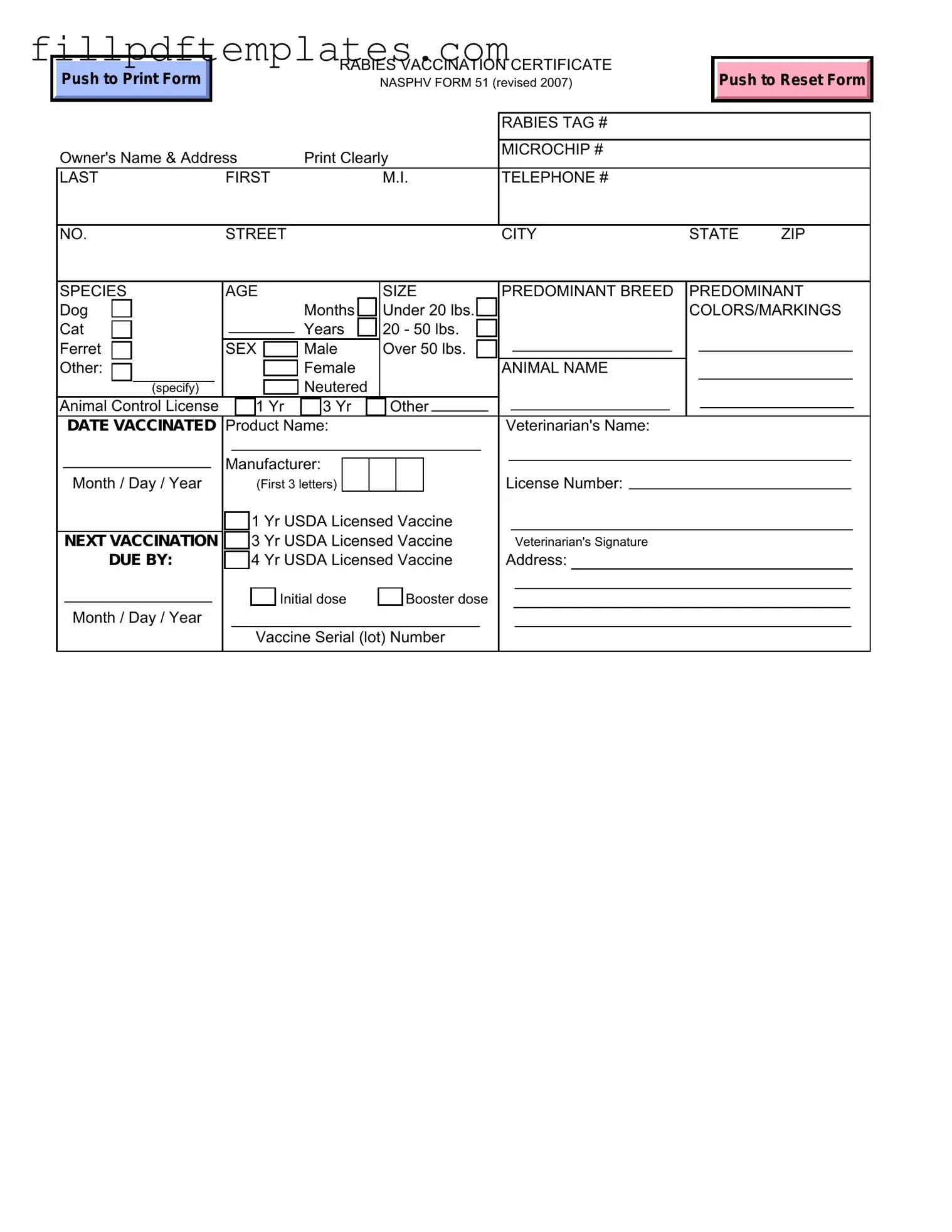
The Rabies Certificate form is an essential document for pet owners, veterinarians, and animal control authorities alike. This form serves as proof that an animal has received the rabies vaccination, a critical step in ensuring public health and safety. It includes vital information such as the owner's name and address, the animal's species, age, and breed, as well as details about the vaccination itself. The form requires the veterinarian's signature, confirming the vaccination date and the product used. Additionally, it captures the animal's unique identifiers, such as a microchip number and rabies tag number. This document is not only important for compliance with local laws but also crucial for travel, boarding, and other situations where proof of vaccination is necessary. Understanding the components of the Rabies Certificate form helps ensure that pet owners maintain accurate records for their animals, ultimately contributing to a safer community.
Additional PDF Templates
Tattoo Contract - The agreement establishes the artist's accountability for their expenses related to the work.
To simplify the process of creating your Last Will and Testament, consider utilizing templates available online; for example, you can find a reliable resource at legalpdfdocs.com, which guides you through the necessary steps to ensure your document meets legal standards and reflects your wishes accurately.
Joint Tenancy in California - The document provides necessary details such as the deceased's name, date of death, and property information.
Similar forms
The Rabies Certificate form shares similarities with several other important documents in the realm of pet health and ownership. Here’s a look at six of them:
- Vaccination Record: Like the Rabies Certificate, a vaccination record details the immunizations your pet has received. It includes dates, types of vaccines, and the veterinarian’s information, ensuring that your pet is up to date on their health needs.
- Health Certificate: A health certificate confirms that a pet is free from contagious diseases. It often requires a veterinarian’s examination, similar to how a rabies vaccination must be administered by a licensed vet.
- Microchip Registration Form: This form documents the microchip details of your pet. Just as the Rabies Certificate includes the microchip number, this registration form ensures that your pet can be identified if lost.
- Transfer-on-Death Deed: This legal document allows property owners to transfer real estate to beneficiaries upon death without probate, similar to how health records like the Rabies Certificate facilitate compliance and safety. For more information, visit https://transferondeathdeedform.com/indiana-transfer-on-death-deed/.
- Pet License Application: A pet license application is required in many jurisdictions. It usually asks for similar information, such as your pet’s breed, age, and vaccination status, much like the details found on the Rabies Certificate.
- Pet Insurance Policy: While a pet insurance policy covers health care costs, it often requires proof of vaccinations. The Rabies Certificate serves as that proof, showing that your pet is protected against rabies.
- Travel Health Certificate: When traveling with pets, a travel health certificate is often necessary. This document, like the Rabies Certificate, verifies that your pet is healthy and up to date on vaccinations, ensuring compliance with travel regulations.
Document Specifics
| Fact Name | Description |
|---|---|
| Form Title | This is the Rabies Vaccination Certificate, specifically NASPHV FORM 51, revised in 2007. |
| Rabies Tag Number | A unique Rabies Tag Number is required for each vaccinated animal. |
| Owner Information | Pet owners must provide their name, address, and telephone number clearly on the form. |
| Animal Details | The form collects information about the animal, including species, age, size, and breed. |
| Vaccination Duration | Vaccination can be valid for either 1 year or 3 years, depending on the vaccine used. |
| Veterinarian Information | The veterinarian's name, license number, and signature are required to validate the certificate. |
| Microchip Number | Owners are encouraged to include the animal's microchip number for identification purposes. |
| State Regulations | State-specific laws govern the use and acceptance of the Rabies Certificate, varying by location. |
Things You Should Know About This Form
-
What is a Rabies Certificate?
A Rabies Certificate is an official document that verifies a pet has been vaccinated against rabies. It includes important details such as the pet's information, vaccination dates, and the veterinarian's signature. This certificate is often required for travel, boarding, or participation in pet events.
-
Why is a Rabies Certificate important?
This certificate serves as proof that your pet has received the rabies vaccination, which is crucial for public health. Rabies is a deadly virus that can affect both animals and humans. Many states and localities require pets to be vaccinated and to have a valid certificate to help prevent the spread of this disease.
-
How can I obtain a Rabies Certificate?
To obtain a Rabies Certificate, you need to have your pet vaccinated by a licensed veterinarian. After the vaccination, the veterinarian will fill out the certificate with your pet's information, vaccination details, and their signature. Make sure to request a copy for your records.
-
What information is included on the Rabies Certificate?
The certificate typically includes:
- Owner's name and address
- Pet's name, species, age, size, and breed
- Microchip number (if applicable)
- Vaccination date and product name
- Veterinarian's name and license number
- Next vaccination due date
- Rabies tag number
-
How long is a Rabies Certificate valid?
The validity of a Rabies Certificate depends on the type of vaccine administered. Commonly, there are one-year and three-year vaccines. The certificate will indicate when the next vaccination is due, ensuring your pet remains protected and compliant with local regulations.
-
What should I do if I lose my Rabies Certificate?
If you lose your Rabies Certificate, contact your veterinarian. They can often provide a duplicate copy or reissue the certificate based on their records. Keeping a digital copy or taking a photograph of the certificate can help prevent future loss.
-
Are there any exemptions for getting a Rabies Certificate?
Some states may allow exemptions for certain pets due to medical reasons, such as allergies to the vaccine. However, these exemptions vary widely. It's essential to check local laws and consult your veterinarian to understand what applies to your situation.
-
Can I travel with my pet without a Rabies Certificate?
Traveling with your pet usually requires a Rabies Certificate, especially for interstate or international travel. Many destinations have specific vaccination requirements to prevent the spread of rabies. Always check the regulations of your travel destination before departure to ensure compliance.
Documents used along the form
The Rabies Certificate is an essential document for pet owners, especially when traveling or participating in events. However, several other forms and documents often accompany it to ensure compliance with health and safety regulations. Below are some of these important documents.
- Veterinary Health Certificate: This document certifies that an animal is free from contagious diseases and has received necessary vaccinations. It is often required for interstate travel or entry into certain events.
- Microchip Registration Form: This form registers the pet's microchip with a national database. It helps reunite lost pets with their owners and provides proof of ownership.
- Animal Control License: Many jurisdictions require pet owners to obtain a license for their animals. This document typically includes the owner's information and the pet's details, ensuring that the animal is registered with local authorities.
- Corporate Compliance Document: This document is crucial for new businesses and includes important legal information. It may require filing the Articles of Incorporation to formally establish a corporation under state law.
- Pet Insurance Policy: While not a mandatory document, having a pet insurance policy can provide financial protection against unexpected veterinary costs. It outlines coverage details and the responsibilities of both the pet owner and the insurer.
These documents work together to safeguard the health of pets and the community. Ensure you have them readily available when needed to avoid any complications.
Rabies Certificate Preview

|
|
|
RABIES VACCINATION CERTIFICATE |
|
|
|
Push to Print Form |
|
Push to Reset Form |
||
|
|
NASPHV FORM 51 (revised 2007) |
|||
|
|
|
|
|
|
|
|
|
|
|
|
|
|
|
|
RABIES TAG # |
|
|
|
|
|
|
|
|
Owner's Name & Address |
Print Clearly |
MICROCHIP # |
|
|
|
|
|
|||
|
LAST |
FIRST |
M.I. |
TELEPHONE # |
|
NO.STREET
CITY |
STATE |
ZIP |
SPECIES |
AGE |
|
|
|
|
|
|
|
|
SIZE |
PREDOMINANT BREED |
PREDOMINANT |
|||||||||||||||||||||||||||||||||
Dog |
|
|
|
|
|
|
|
|
|
|
Months |
Under 20 lbs. |
|
|
|
|
|
|
|
|
COLORS/MARKINGS |
||||||||||||||||||||||||
Cat |
|
|
|
|
|
|
|
|
|
|
|
|
|
|
Years |
|
|
20 - 50 lbs. |
|
|
|
|
|
|
|
|
|
|
|
|
|
|
|||||||||||||
|
|
|
|
|
|
|
|
|
|
|
|
|
|
|
|
|
|
|
|
|
|
|
|
||||||||||||||||||||||
|
|
|
|
|
|
|
|
|
|
|
|
|
|
|
|
|
|
|
|
|
|
|
|
||||||||||||||||||||||
Ferret |
|
|
|
|
SEX |
|
|
Male |
Over 50 lbs. |
|
|
|
|
|
|
|
|
|
|
|
|
|
|
||||||||||||||||||||||
|
|
|
|
|
|
|
|
|
|
|
|
|
|
|
|
||||||||||||||||||||||||||||||
|
|
|
|
|
|
|
|
|
|
|
|
||||||||||||||||||||||||||||||||||
|
|
|
|
|
|
|
|
|
|
|
|
|
|
|
|
||||||||||||||||||||||||||||||
Other: |
|
|
|
|
|
|
|
|
|
|
|
|
|
|
Female |
|
|
|
|
|
|
|
|
|
|
ANIMAL NAME |
|
|
|
|
|||||||||||||||
|
|
|
|
|
|
|
|
|
|
|
|
|
|
|
|
|
|
|
|
|
|
|
|
|
|||||||||||||||||||||
|
|
|
|
|
|
|
|
|
|
|
|
|
|
|
|
|
|
|
|
|
|
|
|
|
|||||||||||||||||||||
|
|
|
|
|
|
|
|
|
|
|
|
|
|
|
|
Neutered |
|
|
|
|
|
|
|
|
|
|
|
|
|
|
|
|
|
|
|
|
|
|
|||||||
|
|
|
|
(specify) |
|
|
|
|
|
|
|
|
|
|
|
|
|
|
|
|
|
|
|
|
|
|
|
|
|
|
|
|
|
|
|
||||||||||
|
|
|
|
|
|
|
|
|
|
|
|
|
|
|
|
|
|
|
|
|
|
|
|
|
|
|
|
|
|
|
|
|
|
|
|
|
|||||||||
|
|
|
|
|
|
|
|
|
|
|
|
|
|
|
|
|
|
|
|
|
|
|
|
|
|
|
|
|
|
|
|
|
|
|
|
|
|||||||||
Animal Control License |
|
|
|
|
|
1 Yr |
|
|
|
3 Yr |
|
|
Other |
|
|
|
|
|
|
|
|
|
|
|
|
|
|
|
|
|
|
||||||||||||||
|
|
|
|
|
|
|
|
|
|
|
|
|
|
|
|
|
|
|
|
|
|
|
|||||||||||||||||||||||
|
|
|
|
|
|
|
|
|
|
|
|
|
|||||||||||||||||||||||||||||||||
|
|
|
|
|
|
|
|
|
|
|
|
|
|
|
|
|
|
|
|
|
|
|
|||||||||||||||||||||||
|
DATE VACCINATED |
Product Name: |
|
|
|
|
|
|
|
|
|
|
Veterinarian's Name: |
|
|
|
|
||||||||||||||||||||||||||||
|
|
|
|
|
|
|
|
|
|
|
|
|
|
|
|
|
|
|
|
|
|
|
|
|
|
|
|
|
|
|
|
|
|
|
|
|
|
|
|
|
|
|
|
|
|
|
|
|
|
|
|
|
Manufacturer: |
|
|
|
|
|
|
|
|
|
|
|
|
|
|
|
|
|
|
|
|
|
|
|
|
|
|
||||||||||||
|
Month / Day / Year |
|
|
|
|
|
|
|
|
|
|
|
|
|
|
License Number: |
|
|
|
|
|
|
|
||||||||||||||||||||||
|
|
|
|
|
|
(First 3 letters) |
|
|
|
|
|
|
|
|
|
|
|
|
|
|
|
|
|
||||||||||||||||||||||
|
|
|
|
|
|
|
|
|
|
|
|
|
|
|
|
|
|
|
|
|
|
|
|
|
|
|
|
|
|
|
|
|
|
|
|
|
|
|
|
||||||
|
|
|
|
|
|
|
|
|
|
|
|
1 Yr USDA Licensed Vaccine |
|
|
|
|
|
|
|
|
|
|
|
|
|||||||||||||||||||||
|
|
|
|
|
|
|
|
|
|
|
|
|
|
|
|
|
|
|
|
|
|
||||||||||||||||||||||||
|
|
|
|
|
|
|
|
|
|
|
|
|
|
|
|
|
|
|
|
|
|
||||||||||||||||||||||||
|
NEXT VACCINATION |
|
|
|
|
|
3 Yr USDA Licensed Vaccine |
|
|
|
Veterinarian's Signature |
||||||||||||||||||||||||||||||||||
|
|
|
|
|
|
|
|||||||||||||||||||||||||||||||||||||||
|
|
|
|
|
|
|
|||||||||||||||||||||||||||||||||||||||
|
DUE BY: |
|
|
|
|
|
4 Yr USDA Licensed Vaccine |
Address: |
|||||||||||||||||||||||||||||||||||||
|
|
|
|
||||||||||||||||||||||||||||||||||||||||||
|
|
|
|
||||||||||||||||||||||||||||||||||||||||||
|
|
|
|
|
|
|
|
|
|
|
|
|
|
Initial dose |
|
|
Booster dose |
|
|
|
|
|
|
|
|
|
|
|
|
||||||||||||||||
|
|
|
|
|
|
|
|
|
|
|
|
|
|
|
|
|
|
|
|
|
|
|
|
|
|
|
|
||||||||||||||||||
|
|
|
|
|
|
|
|
|
|
|
|
|
|
|
|
|
|
|
|
|
|
|
|
|
|
|
|
||||||||||||||||||
|
Month / Day / Year |
|
|
|
|
|
|
|
|
|
|
|
|
|
|
||||||||||||||||||||||||||||||
|
|
|
|
|
|
|
|
|
|
|
|
|
|
|
|
|
|
|
|
|
|
|
|
|
|
|
|
|
|
|
|
|
|
|
|
|
|
|
|
||||||
|
|
|
|
|
|
|
|
|
|
|
|
|
|
|
|
|
|
|
|
|
|
|
|
|
|
|
|
|
|
|
|
|
|
|
|
|
|
|
|
||||||
|
|
|
|
|
|
|
|
|
|
|
|
|
|
|
|
|
|
|
|
|
|
|
|
|
|
|
|
|
|
|
|
|
|
|
|
|
|
|
|
||||||
|
|
|
|
|
|
|
|
|
|
|
|
Vaccine Serial (lot) Number |
|
|
|
|
|
|
|
|
|
|
|
|
|
|
|
||||||||||||||||||
|
|
|
|
|
|
|
|
|
|
|
|
|
|
|
|
|
|
|
|
|
|
|
|
|
|
|
|
|
|
|
|
|
|
|
|
|
|
|
|
|
|
|
|
|
|